
Common Fire Safety Gaps We Notice During Routine Visits
Most fire safety issues don’t show up because someone was careless.
They show up because time passes, staff changes, buildings evolve, and small details quietly drift out of alignment.
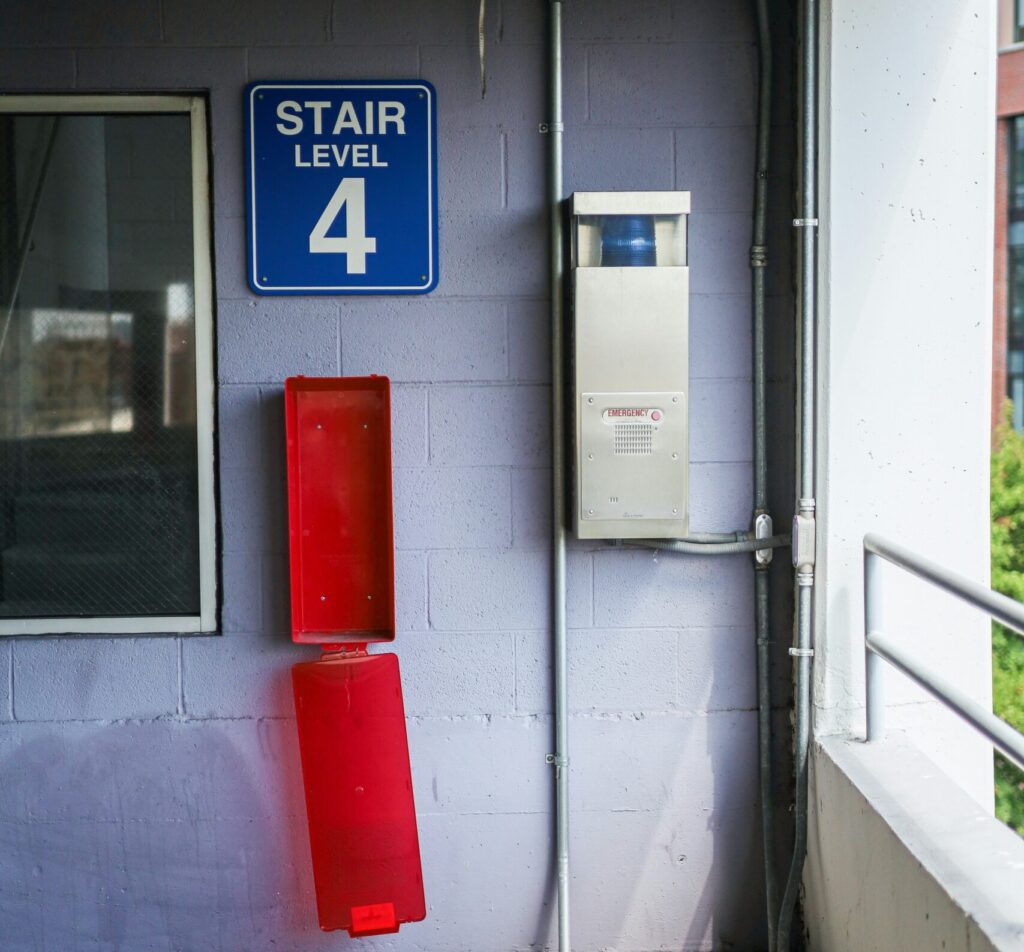
When we’re on-site for routine service visits, we tend to see the same patterns again and again. Not red flags. Not obvious violations. Just ordinary gaps that form when safety equipment is expected to take care of itself.
These are the things that don’t usually feel urgent day to day, but over time, they matter.
Here are some of the most common ones:
Equipment That’s Still There, Just Not Quite Ready
Fire extinguishers are mounted, visible, and exactly where they’ve always been. On the surface, everything looks fine.
But a closer look often reveals small changes:
- Pressure gauges sitting just outside the green
- Safety pins missing or seals broken
- Units partially blocked by furniture, stacked boxes, or displays added later
None of this happens overnight. It’s gradual. The extinguisher didn’t disappear, it just stopped being fully ready.
Because nothing looks wrong, these details are easy to miss. Until someone actually checks, the assumption is that the equipment is doing what it’s always done.
Changes to the Space That Didn’t Trigger a Safety Review
Businesses don’t stay static. Rooms get repurposed. Equipment gets upgraded. Storage expands. Workflows change.
What often doesn’t change at the same pace is the fire protection layout.
An extinguisher that made perfect sense five years ago may no longer be positioned near the risk it was meant to cover. In some cases, the hazard moved, but the protection didn’t.
This isn’t negligence. It’s simply forgetting that fire safety plans are tied to how a space is used, not how it used to be.
Inspections That Were Done, Just Not All the Way
In many buildings, the intention to stay compliant is clearly there.
Inspection tags are present. Logs were started. Someone took responsibility at one point.
But over time we’ll see:
- Monthly checks that stopped when a key employee left
- Annual service pushed back because “everything looks fine”
- Records that were started carefully, then slowly abandoned
No one decided inspections didn’t matter. They just lost momentum. And once that rhythm breaks, it’s hard to notice how long it’s been.
New Staff Who Were Never Shown the Basics
Turnover is normal. Training priorities shift. New hires are focused on learning their jobs.
One of the most common gaps we see is simple: people don’t know what’s on the wall.
They don’t know what type of extinguisher they’re looking at. They don’t know what the gauge should read. They don’t know who to tell if something seems off.
That’s not a failure of the employee. It’s a reminder that safety knowledge doesn’t automatically transfer when roles change.
If no one explains it, people assume someone else is responsible.
Equipment That Became “Part of the Background”
This one is subtle, and very common.
When equipment has been in the same place for years, it stops being noticed. It blends into the environment like an exit sign or a light switch.
When nothing has gone wrong, it’s easy for safety to move into the background. Inspections feel routine instead of purposeful. Equipment becomes scenery instead of a system.
Ironically, that sense of stability is often when small gaps grow, not because people stopped caring, but because everything felt steady.
Assumptions Based on “We’ve Never Had an Issue”
Past experience carries weight.
If a business has never had a fire, never failed an inspection, and never been cited, it’s natural to assume the system is working as-is.
But fire safety doesn’t measure success by what hasn’t happened yet. It’s built for situations no one expects and hopes never occur.
When assumptions replace verification, small details are more likely to slip through unnoticed.
Why Routine Visits Matter
Routine service visits aren’t about catching people doing something wrong. They’re about catching drift.
They exist because fire safety systems don’t fail loudly. They don’t announce when they’re slightly out of date or partially blocked or no longer well-matched to the space.
Most gaps don’t come from disregard. They come from normal business life, growth, change, turnover, and time.
A routine visit simply brings everything back into focus.
The Bigger Picture
When you see these gaps listed out, the reaction is often relief:
“Okay. This isn’t just us.”
And that’s the point.
These are common patterns across many types of buildings. Making them visible isn’t about blame, it’s about awareness.
Because the sooner small gaps are noticed, the easier they are to correct. And most of the time, nothing major needs to change, just a few details brought back into alignment.
Fire safety works best when it’s checked, refreshed, and re-noticed, before anyone needs it.